Tuesday, January 10, 2023

Embark on a Creative Journey to Overcome Trauma Through Art Therapy

Embark on a Creative Journey to Overcome Trauma Through Art Therapy

For any trauma survivor, talking about the experience can be challenging. Really hard. Depending on the individual’s experience, although effective, traditional psychotherapy can be very intrusive and head-on. Verbal articulation of our deepest, most daunting memories and fears simply does not come easy, no matter how seemingly resilient and sturdy we may appear on the outside. The shell is always tough; protecting the vulnerable bits, the subtleties within, that’s a whole different story. There’s no inner armor, no blanket to cover us from the world’s harm. Verbalizing a traumatic experience can be a traumatic event in itself, as it can trigger memories our psyche cannot process or rationalize. Confronting trauma face-to-face is often an overwhelming event. And that’s precisely why we resort to creative outlets. Can we overcome trauma through art therapy? Let’s see. 

Defining trauma

What exactly is trauma? Psychology defines trauma as a severe emotional response to a particular life event; the death of a loved one, abuse, war, natural disasters, and other similarly dreadful experiences. Shock and denial are typical coping mechanisms. Not to mention that a traumatized individual can experience an array of emotions, even years after the very event. Trauma can affect and cause reactions not only on a psychological level, but it can also encompass the emotional and physical plane.

Accepting the traumatic event is the first step.

Types of trauma

There are three main types of trauma:

  • acute trauma: results from a single event
  • chronic trauma: prolonged and repeated, such as domestic violence
  • complex trauma: exposure to different singular traumatic events; multiple traumatic experiences of interpersonal nature


Psychological and emotional symptoms:

  • fear and anxiety
  • self-blame
  • guilt, shame
  • hopelessness
  • denial, disbelief
  • irritability, mood swings, anger
  • withdrawing socially
  • feeling numb

Physical symptoms:

  • muscle tension
  • nightmares
  • insomnia
  • poor concentration
  • fatigue
  • feeling edgy and agitated
  • scared easily
  • racing heartbeat
  • pains and aches

A traumatic experience can impede one’s ability to articulate emotions, as well as directly affect one’s ability to maintain relationships. Furthermore, traumatized individuals often withhold feelings or respond through outbursts. So many turn to drug addiction as a way to alleviate the unprocessed event.

If left unaddressed, trauma can have detrimental consequences.

Art therapy: what is it?

Art therapy, being a hybrid field, combines creative expression and applied psychological theory to treat various psychological disorders. It cleverly bypasses any therapy form’s most feared and demanding aspect: conversation. So, in a way, it is benevolently sneaky at its core, as it gently pushes us toward facing the monster, yet without ever using imperative. Instead of verbal guidance, we are offered a blank canvas. And a brush. And some paint.

Most importantly – we are offered freedom of expression. And when given permission, the subconscious eagerly treads the cerebral pathway, suddenly transmuting into something irreversibly tangible. And just like that, the monsters are out. Art therapy is an exquisite tool for conveying the unutterable in us, and that’s precisely why and how it can help heal trauma wounds.


Art therapy techniques

The ultimate goal of art therapy is to achieve self-expression and personal insight. Unlike traditional “Have a seat. How did that make you feel?” therapeutic methods, this creative approach is about circumventing the source of one’s overwhelm (i.e., trauma) and finding less intrusive ways to process and consequently face and understand the negative experience. We can overcome trauma through art therapy by gaining essential insights and developing healthy coping mechanisms. Furthermore, the seemingly childish and naive therapeutic method can, indeed, help us expand self-awareness. By embarking on this creative journey, we are able to explore our thought patterns and suppressed emotions without feeling as though the terrible truths are being imposed on us against our will or capacities, for that matter. Art therapy techniques include:

  • Pottery
  • Working with clay
  • Drawing
  • Painting
  • Scribbling
  • Doodling
  • Coloring
  • Sculpting
  • Carving
  • Collage
  • Photography
  • Finger painting
Art therapy addiction treatment recovery program

 Art therapy: settings

Another perk of art therapy: its versatile nature welcomes different settings, tools, moods, and narratives. It can be done literally – anywhere. Online or in person. Many trauma survivors move after the malicious event. If that is the case, finding new, healthy surroundings is key to healing from a traumatic experience. Fishing Chinook in Alaska? Waterfront living in Florida? – whatever the choice, it can benefit your health, that’s for sure. So, where does art therapy usually take place? If done in person with a certified art therapist, facilities can include the following:

  • women’s shelters
  • art studios
  • private practice offices
  • wellness centers
  • homeless shelters
  • universities
  • elementary schools
  • nursing homes
  • hospitals

– pretty much everywhere.

Less apparent benefits of art therapy

Art therapy is recommended for all trauma survivors, as it can help with processing difficult emotions, anxiety, depression, substance abuse, and chronic stress. Additionally, it can boost our self-esteem and self-confidence, regulate our emotional response, develop (or restore) social skills and alleviate acute trauma symptoms, all through self-expression and self-exploration. Art therapy can help us:

  • learn how to manage triggers and stress
  • enhance our verbal and nonverbal communication skills
  • adopt a healthy conflict resolution approach
  • deal with difficult emotional responses such as frustration, anger, guilt, shame, and embarrassment
  • expand our self-awareness


Say “NO” to self-doubt

As a creative form of therapy, art therapy can induce feelings of resistance. “I’m not good enough.” “I don’t even know how to draw.” “Color books are for children.” Often, self-doubt creeps in, and individuals quit before they’ve had the chance to get acquainted with all the healing benefits this “silly” therapeutic approach can provide. Art therapy’s goal (or the expectation) isn’t masterpiece production but providing trauma survivors with an opportunity to engage in a constructive dialogue with their inner “abuser.” The naive form of emotional expression (creating art) knows no age; it is merely our innate ability to make sense of internal processes. Why not use it? From adolescent trauma survivors with an alcohol abuse history to veterans diagnosed with PTSD – all can benefit.


Final thoughts

Can we overcome trauma through art therapy? Yes. But only if we allow ourselves to be open, honest, and finally – accepting of changes. It’s only up from here.

Photo credits:

https://ift.tt/DdPiYnf
https://ift.tt/sugxka5
https://ift.tt/lDsIHEw

Embark on a Creative Journey to Overcome Trauma Through Art Therapy-All In Solutions-All In Solutions - A Solutions Based Behavioral Healthcare Group


from All In Solutions https://ift.tt/MOaDSmz
via IFTTT

Monday, October 31, 2022

Dependence vs. Addiction: What’s the Difference?

Dependence vs. Addiction: What’s the Difference?

Due to the widespread use and general social acceptance of drugs and alcohol, many people are confused regarding dependence vs. addiction: what’s the difference? Unfortunately, individuals who are not familiar with the complexities of substance use will typically turn to ‘addiction’ as a catch-all term. The lack of accurate terminology can lead to confusion, misunderstandings, and even stigma regarding rehabilitation and treatment. To help set the record straight, we will discuss dependence and addiction.

What is dependence?

Dependence on drugs and alcohol usually exhibits in two prominent ways: The gradual buildup of tolerance and the withdrawal symptoms. Individuals may have a dependence on a substance without necessarily developing an addiction. However, in most cases, addiction will quickly follow if the initial dependence isn’t addressed.

Tolerance can easily be explained by substances like alcohol. For example, when a person frequently drinks excessive amounts of alcohol, over time, they will require larger quantities to achieve the same level of inebriation. Of course, that kind of consumption can lead to many issues, and we recommend seeking alcohol treatment to prevent severe health complications.

Withdrawal symptoms occur when a person attempts to reduce their use or stop using entirely. The exact symptoms will depend on the substance in question, but they are always uncomfortable and sometimes even painful. If individuals are using hard drugs, withdrawal symptoms can be almost impossible to overcome without professional help. Therefore, it would be best to contact a professional treatment center rather than trying to overcome the withdrawal symptoms alone.

Casual drinking makes telling the difference between dependence vs. addiction difficult.
Even casual drinking can lead to dependence on alcohol.

There are two primary forms of dependence: physical and mental.

Physical dependence is typically characterized by cravings and irritability when a substance isn’t used. Medical professionals always recommend that it’s better to slowly reduce the usage over time rather than to stop abruptly. A sudden stop in drug or alcohol use can lead to severe withdrawal symptoms. This can be particularly problematic when individuals use prescription medication, and people frequently end up addicted to prescription drugs.

Prescription drug addiction can quickly develop from prolonged use or simply misunderstanding how to use prescription medication. Individuals who take prescription medication to combat a chronic issue can create a physical tolerance. This tolerance can trick them into using more of the drug to avoid chronic pain or other problems. The experts from consumeropinion.org run a database of different providers and services and recommend using medical alert devices. Such devices can remind you to take your prescription meds only at times recommended by your physician. However, it would be best to consult with your doctor regarding prescription drug use and how to taper off your recommended dosage slowly.

Mental dependence can exhibit itself as a desire to use that is conditioned. The events and feelings that may cause a desire to use are often called triggers. These triggers lead to biochemical changes in an individual’s brain chemistry. The results of these triggers can present themselves as a strong desire to use; however, they can also cause irritability, nervousness, anxiety, and depression.

Shadow of a hand reaching out for help.
Addiction is often accompanied by depression and other co-existing mental disorders.

What is addiction?

Addiction is formally called substance use disorder and is classified as a diagnosable medical condition. The American Society of Addiction Medicine defines addiction as a chronic mental illness. This means that addiction cannot be healed; however, its symptoms can be treated and mitigated. Addiction often presents itself as the compulsive use of drugs, regardless of the harmful consequences to a person’s physical and mental health. Persons suffering from long-term drug or alcohol abuse experience changes to their brain chemistry and a vast array of physical symptoms.

If left untreated, addiction will usually get worse over time. As individuals build up a tolerance, they will undoubtedly use more to achieve the same high. This behavior can cause organ damage, overdose, and in extreme cases, even death. Most individuals suffering from addiction believe they can stop their substance abuse if they want to. Unfortunately, overcoming addiction can be highly challenging and is usually impossible without professional help.

Causes for addiction

Addiction frequently develops from dependence on drugs or alcohol. A combination of factors can lead to addiction, such as specific brain chemistry, a genetic predisposition, and various societal factors. Of course, certain hard drugs are incredibly addictive and can cause addiction to form almost immediately. If you or a loved one is struggling with substance use disorder for hard drugs, you should seek drug addiction treatment at a professional recovery center.

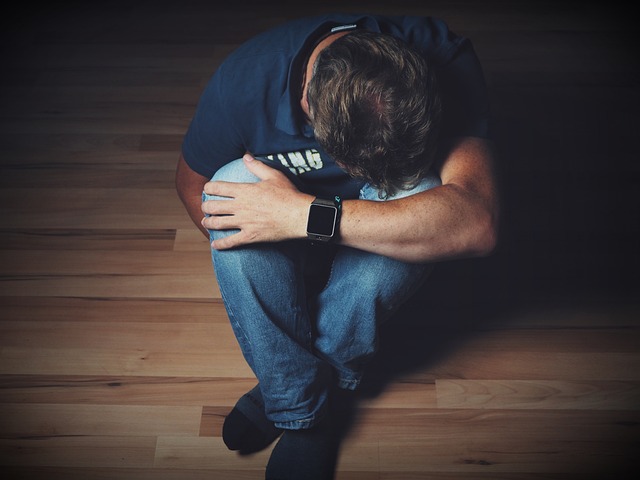
Man suffering from addiction with a mental dependence.
Even some professionals have trouble telling the difference between dependence vs. addiction.

Dependence vs. addiction

When an individual has both the physical and mental symptoms of dependence, they usually suffer from addiction. Although dependence isn’t directly synonymous with addiction, individuals suffering from substance use disorder are usually experiencing dependence as well. One of the best ways to differentiate dependence vs. addiction is that individuals with addiction have both physical and mental dependence, and they exhibit compulsive and uncontrollable behavior. Individuals with addiction will go to great lengths to obtain and use the substance they are addicted to. On the other hand, dependence may be present without addiction, but if left unchecked, substance dependency can lead to addiction.

Substance abuse and substance dependence are often equated, even among medical professionals. The best way to tell them apart is by looking at the frequency and extent of the substance use. It’s hard to give a universal answer since the extent of use that characterizes addiction will depend on the substance in question.

Another point of confusion can stem from the different vocabulary used by various institutions and agencies. In recent years there have been significant efforts to standardize the terminology used for substance use and the various disorders accompanying it.

In conclusion

If we try to understand dependence vs. addiction, we can better understand the reasons and causes for substance use and the best ways to help individuals suffering from addiction. It is also essential for individuals in recovery to educate themselves on the nature of addiction. Learning about triggers and physical dependence can help individuals successfully achieve recovery and prevent relapse. If you or a loved one are struggling with substance use, reach out for help now.

Dependence vs. Addiction: What’s the Difference?-All In Solutions-All In Solutions - A Solutions Based Behavioral Healthcare Group


from All In Solutions https://ift.tt/D9Keusf
via IFTTT

Monday, September 26, 2022

Best dating sites for over 50

Best dating sites for over 50

Many local newspapers had online personals in the mid 1990s but were bought out by these big dating sites. From some of the comments it really shows how desperate dating sites are for money that they even advertise in comment sections. You have a much better chance going to local events and you will probably spend less than what you would spend on an online dating site.

Other apps have indicated that they might actually move closer to Facebook. For example, Bumble, founded by a former Tinder executive, said they had already reached out to Facebook regarding how to collaborate. And, “One thing everyone seems to agree on is that Facebook’s effectively endorsing online dating will be a huge legitimization event for the industry,” says Jefferies Internet analyst Brent Thill. According to Amanda Bradford, chief executive of The League, an elite dating app, “Facebook is validating that dating is a high-tech industry with really interesting and hard problems to solve. Still, Facebook could face some obstacles in building enough separation between the dating service and the legacy social network; some users might not like having both activities live on one app.

After giving him some time to cope with his cat passing away, he made plans to see her again and she was thrilled. He canceled the date last minute again because he said his grandma had died. Although this seemed too tragic to be true, she gave him the benefit of the doubt that he was telling the truth. Additionally, if someone is giving you a checklist right away of all of the things they want in a future partner, this may be a red flag for some controlling behaviors. It’s one thing if they express their non-negotiables but it’s another thing entirely if they are listing required traits. If you feel like someone is already trying to change things about you to suit their needs, that’s not okay. How someone initiates a conversation with you will say a lot about how they view you as a person and how they might treat you as a partner.

Online dating users are more likely to describe their overall experience with using dating sites or apps in positive, rather than negative, terms. Some 57% of Americans who have ever used a dating site or app say their own personal experiences with these platforms have been very or somewhat positive. Still, about four-in-ten online daters (42%) describe their personal experience with dating sites or apps as at least somewhat negative. Happily, there are some dating services that are looking to overcome the vanity. For example, Hinge matches people based on personality and preferences and lets you create a more interesting and rounded profile to draw people in. One of the few dating sites designed for affairs, Ashley Madison connects users for discreet encounters.

Basically all a guy like you has to do is instantly grab her attention in a memorable way with both your profile and your messages, then spend the least amount of time possible convincing her to meet you in person. For those who are hesitant to enter the online dating world for reasons related to safety or awkward conversation lulls, Double aims to take the pressure off with Double dates as opposed to one-on-one.

State things that are really important to you and be done with it. Connor turned an attempt at small talk into a rant about “gold-digging whores,” and the dating app was not having it. Matt- But what about when you said you would meet me in real life and we would lose our virginity together. One Love educates young people about healthy and unhealthy relationships, empowering them to identify and avoid abuse and learn how to love better. If you are going somewhere that serves alcoholic beverages, most bartenders are using secret codes to help customers signal, privately, when they need help if they’re getting harassed or feeling unsafe on a bad date.

With no financial requirement, free sites will naturally attract a greater proportion of people who are not really committed to finding a genuine relationship. Memberships you gain additional features such as being able to send more messages and receiving event discounts.

Best dating sites for over 50-All In Solutions-All In Solutions - A Solutions Based Behavioral Healthcare Group


from All In Solutions https://ift.tt/JOIfzj6
via IFTTT

Monday, September 12, 2022

How Does Going to Rehab Affect Legal Proceedings?

How Does Going to Rehab Affect Legal Proceedings?

It can be difficult to tell how some people will perceive your choice to enter a rehab facility. If you’re already under a lot of pressure with child custody cases or court appearances to show your growth, you may be worried about how going to rehab will look to other people.

Rest assured, going to rehab will always be a good thing for your legal case. Getting help for your addiction or mental health problems shows that you are making positive strides toward a healthier life for yourself and your loved ones.

Will Rehab Help My Court Case?

Choosing to go to rehab can positively affect your legal case; how much it affects it, however, depends on the type of court proceedings.

Will Rehab Help My Criminal Case?

Whether you face a judge or a jury for sentencing, you stand to make an impression on the person who decides your future. While judges are constrained mainly by sentencing guidelines, there is such a thing as discretionary sentencing. In some cases, this kind of discretion could allow for a lighter sentence after considering your individual circumstances. However, these discretionary decisions are still limited by the law.

Another possibility for leniency lies in mitigating circumstances. If the court determines that you acted based on an emotional disturbance, such as if you suffer from an undiagnosed mental illness, you can receive a reduced sentence. This is called an “Unusual Circumstance.”

Other relevant mitigating circumstances include:

  • Addiction. If your addiction contributed to your crime, and you attempt to receive help, it can be a mitigating circumstance.
  • Difficult personal history. If you suffered traumatic or painful circumstances that may have led you to commit a crime, these could be reasons to choose a lighter sentence.
  • Remorse. Showing you accept responsibility and are sorry can result in a more merciful judgment. Getting help with rehab can be a great way to show your remorse and commitment to change.
lawyer discussing with defendant how going to rehab can help his court case for DUI charges

Can Rehab Help My DWI/DUI Case?

In some states, your charges cannot be automatically reduced by electing to go to rehab. However, this doesn’t mean that your judge or jury cannot use discretionary sentencing.

In many cases, counseling is a mandatory consequence of a DWI or DUI conviction. Rehab is often reserved for more serious cases, especially where someone was injured. Getting ahead of the game and entering rehab on your own can show the court that you’re serious about making changes. 

Does Rehab Affect Parental Custody?

Going into rehab for alcohol addiction will only affect custody hearings that are current or pending. It may feel like “everyone will know” and hold it against you if you go to treatment, but that is one of many myths about substance use disorder treatment and mental health services.

While someone seeking guardianship of your dependents may try to use the fact that you entered rehab against you, there are several reasons it can work in your favor:

  • Going to rehab shows the judge that you are committed to changing and providing a better environment for your dependents.
  • Rehab may be your best long-term solution to keep custody of your children by protecting them from harm.
  • It can show your ex-spouse (or other parties seeking custody) that you are willing to invest whatever it takes to keep your kids. They may be willing to work with you more if they see this willingness to change.
will I lose custody of my kids if I go to rehab?

What if I Miss a Custody Hearing Because I’m in Rehab?

It is better to enter into rehab with enough time to attend your custody hearings after you are discharged. If you miss a court hearing, you cannot present any evidence to the court that you’re still a viable guardian for your children. 

Hearings can be delayed if you get approval from a judge, and you can obtain permission to leave rehab for your custody hearings, but it may be wiser to get help long before it’s an issue.

You can avoid running out of time by familiarizing yourself with what to expect during residential treatment. The amount of time you are in rehab will vary based on your condition and needs.

Can You Go to Rehab if You Have a Warrant?

You will not be barred from entering rehab if there is a warrant for your arrest. However, if the authorities come to collect you, your facility may or may not advise you to turn yourself in.

In many cases, it may be safe to commit to rehab because of the Health Insurance Portability and Accountability Act (HIPAA). According to the Centers for Disease Control (CDC), HIPAA protects sensitive information, including your medical records, from being disclosed without your knowledge or consent.

Because of these protections, recovery centers cannot disclose whether you are or aren’t in their care. If the center does not suggest you turn yourself in, you are protected. In addition, police may be more likely to respect your right to privacy and let you complete your stay. It might make them look bad, especially when it comes to your court proceedings if they force you out of treatment.

addiction specialist on the phone helping find rehab near me

What Happens if You Go to Rehab Before Your Court Date?

If you are on probation while you wait for your court date, you may need to follow some protocol to get approval for rehab.

If you have been commanded to stay in your state and your desired facility is out of state, you will most certainly have to get approval first. In many cases, your probation officer will give you permission to seek treatment. They may require that you sign a release, so they can check in on you to make sure you’re still there.

Can I Go to Rehab if I’m Out On Bail?

Even if you are out on bail, going to rehab before your court date is possible. A rehab center will not deny you, but you should make sure that you don’t miss a court date and get hit with a “failure to appear” that could result in a warrant for your arrest. 

Some legal professionals advise that you get written confirmation from your facility that you are attending their program and send it to your lawyer or your judge, so they know you are seeking treatment. In this case, it is unlikely they will penalize you.

If you receive a bench warrant because of a failure to appear, you can have the warrant recalled by appearing in the court you were called to and showing your certificate of treatment completion. Whether or not your warrant is recalled depends completely on the discretion of the court.

How to Get Court-Ordered Rehab Instead of Jail Time?

Your eligibility for court-ordered rehab as an alternative to jail time will depend on the state. Some states may not consider rehab as an alternative if it was already a part of the mandatory sentencing. 

If you are seeking court-ordered treatment for yourself, it may be best to hire legal help who can advocate for you that this is your best option. Courts are more likely to award court-ordered rehab to people who meet these criteria:

  • Your crime was non-violent.
  • Your crime was a direct result of your addiction.
  • You will definitely benefit from rehab.
  • You qualify for a probationary sentence.

In short, you will most likely not be eligible for court-ordered rehab if you are up for a felony charge.

how to get into rehab instead of going to jail

Your Loved Ones Can Ask for a Screening Investigation

If your approval for a screening investigation is approved, you will undergo tests by mental health professionals and cooperate with the investigations of police officers. Together, they will decide if you meet the qualifications for court-ordered treatment. In such cases, they will reschedule your hearing for after you complete treatment.

You may be assigned court-ordered treatment based on your screening if:

  • You are a danger to yourself or others
  • You are deemed unable to control your actions
  • You are suffering from mental health or addiction problems

What Can I Do to Get a Loved One into Court-Ordered Treatment?

If you’re not looking for court-ordered treatment for yourself but are pursuing avenues of treatment for a loved one, you have options for involuntary commitment.

The process requires a great deal of paperwork and navigating your local clerks or governments. However, if certain conditions are met, you can force someone into rehab with a court order.

Generally, your loved one must meet these conditions to be considered for involuntary commitment:

  • They are completely unable to control their actions either due to emotional or mental disability
  • They have refused voluntary commitment and are able to understand their circumstances enough to elect to it
  • They have refused or thwarted other measures taken to voluntarily commit them
  • Their health or safety is at risk because of their condition
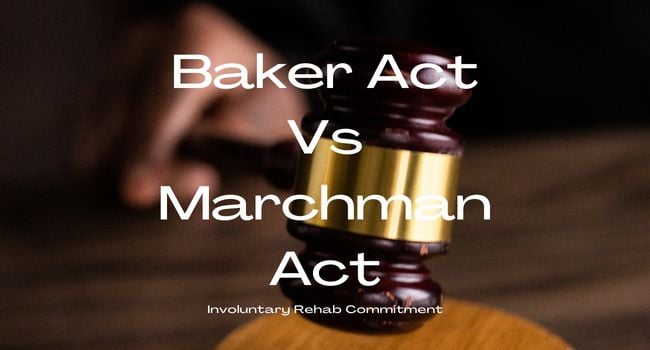
difference between baker act and marchman act to commit someone to rehab involuntarily

Entering Into Rehab Can Help You Turn Your Life Around

Not only can you change the course of your court cases, but you can create sustainable change that may save your life and your relationships. Studies show that those who attend rehab or get addiction treatment are much less likely to go back to jail. According to a review of current research published in Current Psychiatry Reports, there are many effective treatment models for reducing recidivism and improving treatment program retention.

If you are overwhelmed with how to begin treatment, a representative at your prospective treatment center can help you get started. Know that it will be worth the short-term and long-term benefits.

Case managers at All In Solutions Counseling Center have years of experience working with legal counsel for clients to ensure that they get the help they need while improving the outcomes of their ongoing court cases. If you or a loved one are struggling with addiction and have concerns about how going to treatment will impact a criminal court case, custody hearings, or your chances of going to prison, reach out today!

How Does Going to Rehab Affect Legal Proceedings?-All In Solutions-All In Solutions - A Solutions Based Behavioral Healthcare Group


from All In Solutions https://ift.tt/egH4Xah
via IFTTT

Tuesday, August 23, 2022

Can You Force Someone Into Rehab?

Can You Force Someone Into Rehab?

Watching a loved one suffer and struggle with a substance use disorder is painful, especially if you’ve tried everything to help them. After researching and trying all these options, you may be looking at involuntary drug or alcohol rehab as a last resort. There’s a lot to consider, but it’s best to fully understand the protocol and all the resources at your disposal before you make a decision. Here’s what you need to know if you want to force someone into rehab against their will.

How to Commit Someone to Rehab Involuntarily

Laws for involuntary commitment for addiction treatment differ by state. In Florida, there are two acts enabling law enforcement to detain individuals that may be a risk to themselves or others because of mental health or substance abuse issues. There are important differences between the two.

difference between baker act and marchman act to commit someone to rehab involuntarily

Florida Marchman Act

If a person is unstable or dangerous to themselves or others, Florida Statutes § 397.305, also known as the Hal S. Marchman Alcohol and Other Drug Services Act, allows for a person to be voluntarily or involuntarily assessed and committed for substance abuse. Following an assessment, an individual may be court-ordered to enter a substance abuse treatment facility.

Relatives and mental health practitioners can file a petition for an assessment. There is also a provision that any three adults with knowledge of the person’s substance abuse can file. If the assessment is for a minor, the only people who can file a petition are parents, legal guardians, and a licensed service provider.

If you are one of these people for someone struggling with addiction, you can file a claim through this process:

  1. Go to your local Clerk & Comptroller’s office. Fill out a sworn affidavit or petition for the assessment and treatment of your loved one. You will be asked to fill in some details to help the authorities find and identify them, as well as information about this person’s behavior.
  2. Your loved one will be notified and asked to appear in court. You will be offered to testify to their behavior and the effects of substance abuse on their lives. Your loved one will also have the opportunity to testify.
  3. The judge will sign an order granting the petition. If your loved one meets the qualifications stipulated in the Marchman Act, the court will notify them of their assessment appointment. Those who don’t show up to testify for themselves in court and meet the criteria will be taken to their appointment involuntarily.
  4. An assessment is performed within 5 days of the judge’s decision. If the service provider conducting the assessment decides that your loved one meets the criteria for involuntary rehabilitation, they will be summoned to a hearing where a magistrate will decide the length of their stay.

Baker Act vs. Marchman Act

The Marchman Act isn’t the only means for rehabilitating a loved one. While the Marchman Act strictly applies to substance abuse, the Baker Act applies to mental health crises.

Per Florida Statutes § 394.453, a person may be voluntarily or involuntarily assessed and rehabilitated for mental health issues. The Baker Act also stipulates that the person in question may be a threat to themselves or others without treatment. There are a few other reasons a person may be subject to the Baker Act, however. These include:

  • They are mentally or emotionally disabled to the point they cannot understand or control themselves or their actions.
  • Other measures have been taken to voluntarily commit them, and they have refused because of mental illness.
  • They refuse to voluntarily commit themselves because they are unable to understand why they should receive treatment.
  • They are at risk of personal neglect because of their illness.

The process for filing a petition for assessment and rehabilitation is slightly different in the Baker Act. The process for involuntarily committing a loved one is as follows:

  1.  Go to your local circuit court and issue an ex parte order.
  2. After the judge grants the order, a law enforcement officer will take your loved one into custody and to a facility for safekeeping.
  3. Within five days, a hearing will take place during which the court will consider whether the person in question is mentally or emotionally competent enough to give consent to treatment. If they are not, they are appointed a guardian advocate who can act on their behalf. This is most often a family member, caregiver, or friend.
  4. If the court decides your loved one meets the criteria for involuntary committal, they will be sent to a facility for at least sixty days.

There are other ways a person can be involuntarily committed, including through the recommendation of a mental health professional or emergency medical practitioner.

Do Other States Have an Equivalent to Florida’s Baker Act?

In the United States, most other states have an equivalent to the Baker’s Act, though the terms and process vary wildly between them. This process is also referred to as Assisted Outpatient Treatment (AOT), and currently, 47 states have procedures for it.

If you are not a Florida resident and are looking for ways to help a loved one with mental health or substance abuse issues, and they will not receive help voluntarily, look into the requirements for AOT in your state. You can find a state-by-state breakdown of involuntary commitment laws here.

family intervention to force someone into rehab

How to Convince a Loved One to Get Help

Committing a loved one against their will can be a life-saving last resort. However, as a family member or friend, you should make sure they are offered the opportunity to change on their own first if they are capable. The following suggestions could help encourage your loved one to seek treatment for drug or alcohol abuse. 

Consequences, Ultimatums, and Interventions

One of the most important steps in convincing someone with addiction or mental health problems to receive help is to make sure you’re not enabling their self-harming behaviors.

First, allow your loved one to experience the consequences of their actions. Of course, if they are putting themselves or someone else in harm’s way, it’s time to seek emergency help. However, it’s important that you don’t make all of their problems go away. This could include:

  • Allow them to get arrested.
  • Don’t bail them out of jail.
  • Don’t give them money to pay the electricity bill.

Instead, offer them exchanges. For example, don’t give them money to pay the bills, but you can offer them a place to stay while they get help. Don’t give them money, but offer to pay for their treatment if that’s what you’re willing and able to do.

Ultimatums are a useful tool to help set boundaries with people who are becoming a danger to themselves and others. It also protects you from having any part in their self-destructive behavior, even by accident.

Here are some examples of ultimatums:

  • If you don’t accept help, you cannot see your daughter for her own safety and well-being.
  • For the sake of the mental and emotional health of the household, you are not allowed to stay here until you agree to treatment.
  • Until you agree to talk with a counselor, I cannot continue to take your phone calls.

Finally, host an intervention in which you can lay down these ultimatums and lovingly express your concern for your loved one. An intervention should, above all, be a safe, un-blaming, love-filled gathering with people who want to help. 

Plan what you want to say thoroughly, use a mediator if necessary, and make sure that you do not make yourself a victim by casting blame. Pose your concerns, say how their behavior affects you, offer ultimatums, and ultimately, convince them to get help.

There are many ways to help a loved one battling addiction or mental health issues, but laying down boundaries to protect yourself, your family, and your loved one is essential. 

How do you check someone into rehab?

When you’re helping someone to check themselves into rehab voluntarily, you want to research things like rehab centers, payment, and the type of treatment your loved one can and should receive. All of these things will help you make an educated decision.

Finding an addiction treatment center: things to consider

As with any institution that provides a service, you’ll want to thoroughly research the center you’re considering. Here are some things you might want to pay attention to:

  • Ratings: Reviews are the lifeblood of any institution. People trust word of mouth for a reason. Look at the kind and quality of reviews. Are they positive? Did they or their loved ones experience success in their program?
  • Accreditation: Most rehab centers have their accreditations in stickers on their home page, or in their about section. Look for accreditation with the Joint Commission and the Commission on Accreditation of Rehabilitation Facilities (CARF).
  • Treatment programs offered: Do they offer treatment for your loved one’s mental health condition or addiction? If they do, how diverse are their offerings? Programs with a wide variety of offerings may be preferable to centers with only a few kinds, as treatment should never be a one-size-fits-all approach.
  • Insurance, Grants, and Payment Programs: Free treatment is very rare; however, finding an institution that will accept your insurance or even allow you to apply for a grant can help significantly reduce or eliminate up-front costs. Before looking into programs, make sure you know how insurance might cover rehab.
  • Levels of care: The intensity and duration of care vary depending on the risk and need of the person seeking care. The levels of care from most intense to least intense are Inpatient Detox, Residential, Partial Hospitalization, Intensive Outpatient, and Outpatient care. If you’re unsure about what level of care your loved one needs or what kind of treatment would benefit them, be sure to provide plenty of information during your consultation about the needs, behaviors, and risks your loved one and your family are experiencing as a result of their mental health or addiction issues.

If you or a loved one are interested in learning more about the treatment programs offered at any All In Solutions treatment centers, don’t hesitate to reach out to our admissions team. Our treatment advocates have years of experience in helping family members get their loved ones into rehab and can help you explore all the options available to you.

Can You Force Someone Into Rehab?-All In Solutions-All In Solutions - A Solutions Based Behavioral Healthcare Group


from All In Solutions https://ift.tt/Wxv2XNz
via IFTTT

Friday, July 22, 2022

Drug Use in Teens | Normal or Cause for Concern? | Latest Research

Drug Use in Teens | Normal or Cause for Concern? | Latest Research

Introduction to Teen Drug Use

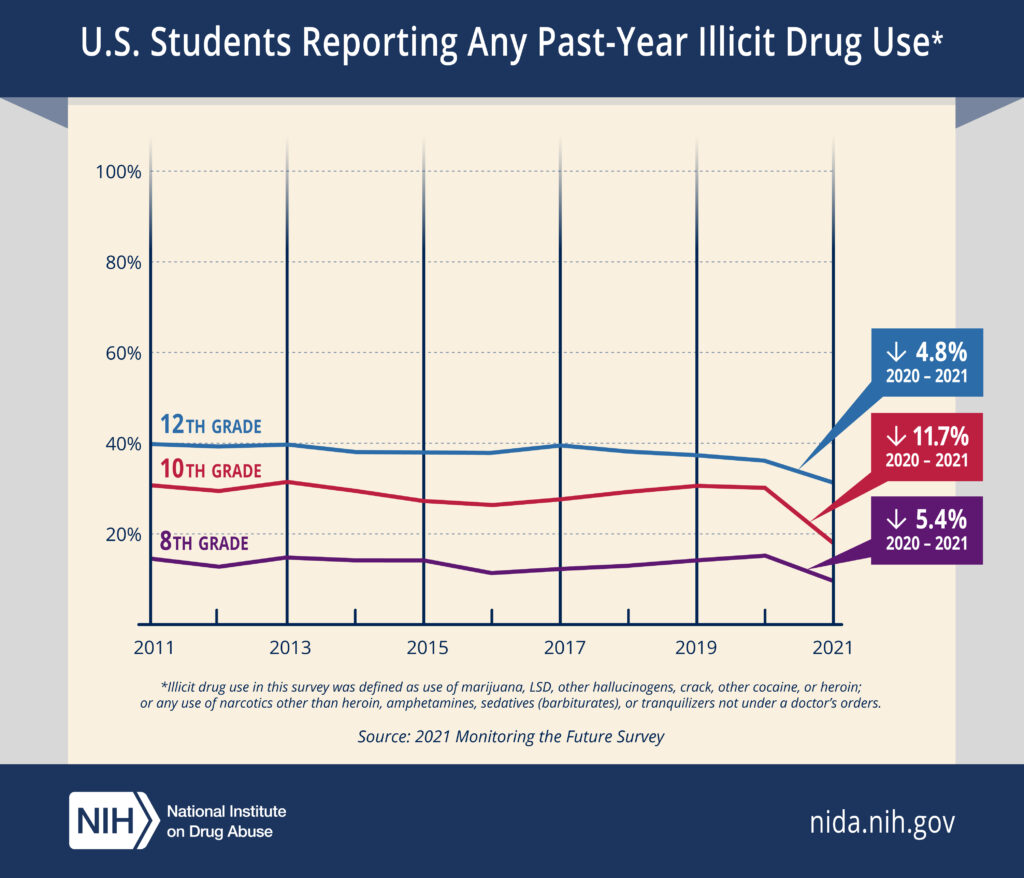
Teens go through a lot of change, both physically and mentally, as they begin their transition to early adulthood. As they begin to socialize less with family and more with peers, they are faced with many important decisions, including whether or not to use drugs and alcohol. And while the percentage of teens using drugs decreased significantly from 2020 to 2021, teen drug use is still very common. And, as the effects of the COVID-19 pandemic recede, it is likely that adolescent experimentation with drugs will continue to climb. While using alcohol, marijuana, and nicotine may seem like “normal” parts of the teen experience, new research shows that there are more long-term risks than previously believed.

Most Commonly Used Drugs by Teens

The Monitoring the Future Survey showed the following were the most commonly used drugs by teens in 2021. The following percentages represent how many of the individuals surveyed reported using the drug in the past year.

  1. Alcohol
    • 58.2 % of 12th graders
    • 41.9% of 10th graders
    • 21.0% of 8th graders
  2. Marijuana
    • 30.5% of 12th graders
    • 17.3% of 10th graders
    • 7.1% of 8th graders
  3. Nicotine
    • 26.6% of 12th graders
    • 19.5% of 10th graders
    • 12.1% of 8th graders
  4. Illicit drugs other than marijuana
    • 7.2% of 12th graders
    • 5.1% of 10th graders
    • 4.6% of 8th graders
NIDA adolescent drug use statistics graph

Risks of Teen Drug Use

Teens Who Misuse Drugs Don’t “Outgrow It”

Until recently, it was widely accepted that most teens who use drugs would eventually outgrow their substance abuse issues. However, new research indicates that teens who use drugs may not just be “going through a phase” and it may not just be harmless experimentation. Rather, symptoms of substance use disorders in adolescence are likely to continue into adulthood.

The University of Michigan study, published in the April edition of the Journal of the American Medical Association, found that more than 60% of teens who report heavy use of alcohol, marijuana, and/or other drugs continue to have a drug problem as adults, often involving misuse of prescription medications. And, it’s not just the heavy users whose adolescent behavior influences their adult life. More than half of the teens who reported mild substance use disorder symptoms experienced mold to severe drug abuse concerns in adulthood.

Sean Esteban McCabe, lead author of the study and director of the Center for the Study of Drugs, Alcohol, Smoking and Health, states, “There has been some work suggesting most people age out of substance-related problems, but these studies have not adequately accounted for the severity of the substance-related problems.”

Related Reading: Teen Alcohol Abuse: How Worried Should Parents Be?

signs that teen alcohol use may lead to alcoholism in adulthood

The Effects of Drugs on the Developing Brain

Atypical development of the brain and the onset of mental health issues could result from the use of a drug by teens. Mental health problems may include depression and anxiety, developmental delays, mental disorders, and suicide ideas. Studies have shown that smoking marijuana could be harmful to the short-term memory of a teenager’s ability to learn, as well as psychomotor abilities.

The Effects of Drug Use on The Body

Teens who abuse drugs significantly increase the risk of dying from accidents, illness suicide, or homicide. Teens who abuse drugs can result in risky behavior such as driving while under the influence or engaging in dangerous sexual activities.

The Impact on Social Life

Teen drug abuse can be detrimental to social acceptance as well as interaction with friends. It is not uncommon for substance abusers youngsters to quit activities, clubs, and sports events at schools. The lack of engagement could cause social disengagement and being viewed as a victim by friends.

Impacts on Academics

Low grades, low attendance, and a higher risk of dropping out prior to the time of graduation are all correlated with teenage substance abuse. The physical and mental negative effects of a teenage addiction to drugs could hinder academic success.

What Causes Teens to Use Drugs?

Based on the National Institute on Drug Abuse These are the five reasons that adolescents and teenagers are at risk of using alcohol and drugs:

  • To be accepted (peer pressure or social acceptance)
  • To feel happy (activate reward pathways within the brain)
  • To Feel better (stress mental health, physical pain)
  • To be better (enhance academic or athletic performance)
  • To experiment (thrill-seeking, new experiences)

Depression

Major depressive disorder (MDD) is a well-known mental health condition that affects teenagers and young adults. The link between teens’ use of drugs and depression may create an endless cycle with serious implications for school performance and social interaction and the rest of a teen’s life. Teen substance abuse typically occurs in conjunction with mental health conditions like anxiety, mood behavior, as well as learning disorders.

Teens seeking treatment for substance abuse should be provided with a complete evaluation of their health (including their mental state). Research has proven that both mental health issues need to be addressed in conjunction in order for the treatment process to be successful. 4

Accessibility

A teenager’s environment is a major factor in their likelihood of committing addiction. Teens with easy access to alcohol and drugs are at a higher risk of becoming addicted. Access to alcohol and drugs poses the greatest threat to teens’ substance abuse. Educating for parents and teenagers is essential. Communication between teens and parents as well as safe medication storage and disposal can help save the lives of children.

Abuse of Prescription Drugs

Studies have revealed that one in four teens believe that prescription medications are suitable for study aids. Three out of three parents believe that ADHD medication can help improve the academic performance of their child even if their child is not diagnosed with any diagnose of ADHD. It’s not recommended for teens to use medications if they don’t have the prescription.

Help for Substance Abuse

All In Solutions Counseling Center is a trusted leader in addiction treatment with rehabs in Florida and New Jersey. If you or a loved one are struggling with substance abuse or mental health, feel free to reach out to our friendly admissions staff to ask questions, get support, or learn more about getting treatment.

Drug Use in Teens | Normal or Cause for Concern? | Latest Research-All In Solutions-All In Solutions - A Solutions Based Behavioral Healthcare Group


from All In Solutions https://ift.tt/GHlupVT
via IFTTT

Thursday, July 14, 2022

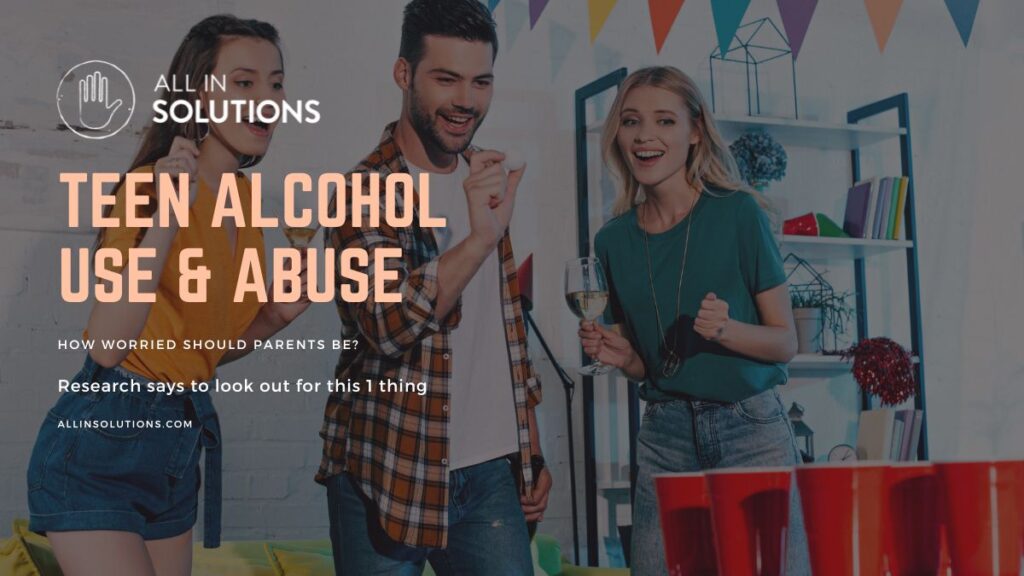
Teen Alcohol Abuse: How Worried Should Parents Be?

Teen Alcohol Abuse: How Worried Should Parents Be?

Parents of teens know how challenging it is to protect their children from danger while allowing them to maintain a healthy sense of autonomy. This balance between allowing them to make (and hopefully learn from) their own mistakes and guiding them toward a successful future often leaves parents questioning their decisions. One of the most common of these questions: how worried should I be about my teen drinking? Fortunately, there is some new research that explores the relationship between teen alcohol abuse and alcohol use disorders later in life. 

Underage Drinking Statistics  

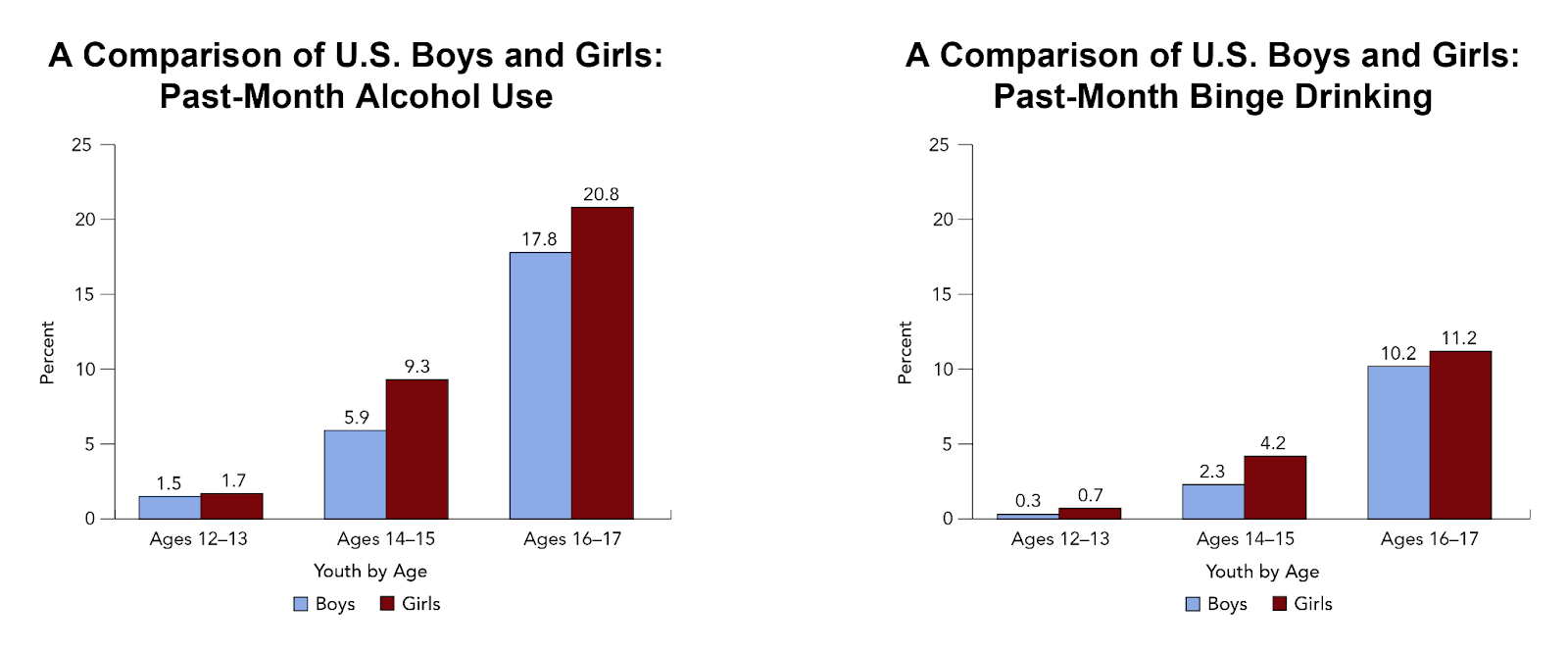
To accurately assess how troublesome a teenager’s alcohol use is, it is important to put the potential problem in context. According to the 2019 National Survey on Drug Use and Health, nearly 40% of those between 12 and 20 years of age report drinking at least once, and almost 20% reported drinking within the past month.

And, according to the National Institute on Alcohol Abuse and Alcoholism, when young people drink they tend to binge drink. In fact, 90% of all drinks consumed by people between the ages of 12 and 20 are consumed through binge drinking (drinking large amounts of alcohol in a single sitting). 

While there are certainly many dangers associated with underage drinking, including alcohol poisoning, motor vehicle accidents, assaults (and sexual assaults), an impact on brain development, and more, the statistics do show that alcohol use among teens is not uncommon. High school students and young adults drink for a number of reasons, some of which may involve peer pressure. But as it relates to problems with addiction and alcoholism, how do parents know if they should be worried?

CMU Study: Drinking Alone Foreshadows AUD in Adolescents and Young Adults

According to a Carnegie Mellon study that investigated the correlation between drinking patterns in adolescence and young adulthood and alcohol use disorder (alcoholism) later in life, drinking alone is a strong indicator of future problems. Kasey Cresswell, lead author of the study says, “Most young people who drink do it with others in social settings, but a substantial minority of young people are drinking alone. Solitary drinking is a unique and robust risk factor for future alcohol use disorder. Even after we account for well-known risk factors, like binge drinking, frequency of alcohol use, socioeconomic status and gender, we see a strong signal that drinking alone as a young person predicts drinking problems in adulthood.” 

So, just how bad is drinking alone? The study found that those who reported drinking alone at age 18 were 35% more likely to show symptoms of alcohol use disorder (AUD) at age 35 compared to social-only drinkers. The effect was even stronger in young adults. Those who reported drinking alone between ages 23-24 were 60% more likely to have a problem with alcohol at age 35 than their counterparts who drank only in social settings.

The study also found that adolescent females who drank alone appeared to be at particular risk for developing future alcohol problems in adulthood.

Florida Alcohol Treatment Experts Respond

When asked about the results of the study, Albert Zingariello, LCSW, and clinical director at All In Solutions Counseling Center stated, “These results support what we have seen for years in treating adults with addictions. It is often the behavior that surrounds the use of drugs and alcohol that is the greatest indication of a potential problem. When young people are using drugs or alcohol in isolation, it should be a big warning sign that the role intoxicants play in their lives is unhealthy and unlikely to resolve without intervention.” 

There are of course many other factors that contribute to problems with alcohol in adulthood, including the age at which a person starts drinking and the presence of family members with drinking problems. Studies have shown that those who start drinking at an especially young age are more prone to addiction. And of course, genetics and family environment play a role.

But, for parents concerned about their teens drinking alcohol, the important thing to know is that if they are drinking alone, it may be time to step in. Other studies by Cresswell show that drinking in isolation is a sign that an individual is using alcohol as a way to cope with negative emotions. This kind of behavior, abusing alcohol as a coping mechanism, has consistently been linked to the development of alcoholism.

If you have questions about teen alcohol abuse or would like to seek help for yourself or a loved one don’t hesitate to reach out to All In Solutions Counseling Center. Experienced treatment center staff are available 24/7 to assist you and your family.

Teen Alcohol Abuse: How Worried Should Parents Be?-All In Solutions-All In Solutions - A Solutions Based Behavioral Healthcare Group


from All In Solutions https://ift.tt/h4q8EYJ
via IFTTT

Understanding the Cycle of Addiction

Understanding the Cycle of Addiction Millions of people and their families are impacted by addiction. Although it’s such a widespread issue...